Death by a Thousand Clouds: The 8 Mistakes Costing Enterprises Millions

The hidden mistakes that are turning your cloud infrastructure into a million-dollar money pit.
Every Monday morning, thousands of executives look over their cloud bills and ask the same question: "How did we spend that much?"
If you're one of them, you're not alone. 32% of cloud budgets are wasted, mostly due to overprovisioned or idle resources1. In real dollars, that's $44.5 billion in 2025 alone2 - enough to fund several space programs or buy a small country.
But here's the kicker: 31% of IT leaders believe their waste exceeds 50%3. These aren't small companies making rookie mistakes. These are established enterprises with dedicated IT teams, sophisticated tools, and strategic cloud initiatives.
So what's going wrong? After analyzing thousands of cloud deployments and studying the latest industry research, we've identified the most expensive mistakes companies make - mistakes that are probably happening in your organization right now.
1) Billion-Dollar Blindness: The Cost Visibility Crisis
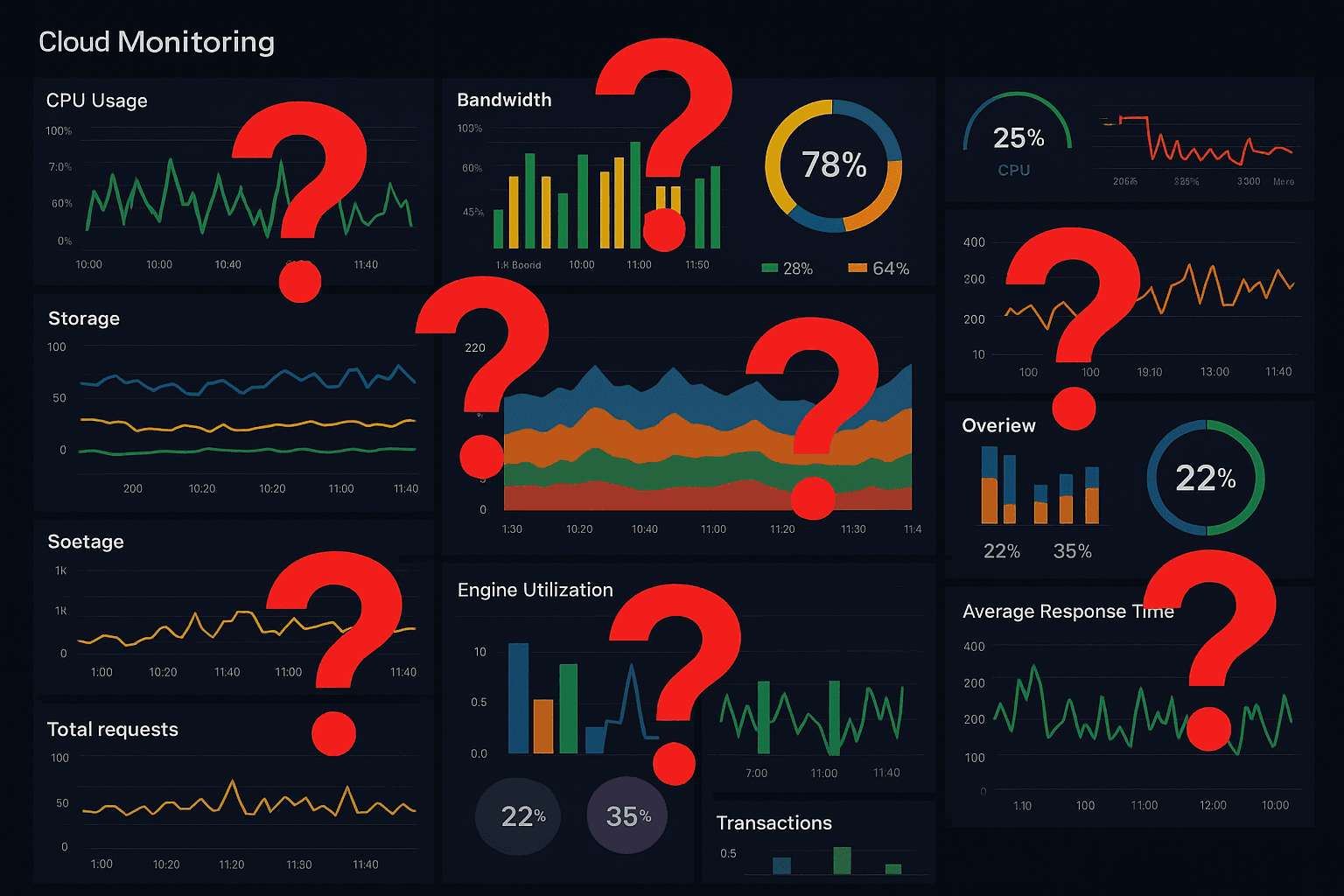
Most organizations are flying blind when it comes to cloud spending. Only 30% of surveyed companies have clear insight into where their cloud budget actually goes4. The other 70% lack the basic systems needed to track which teams, projects, or departments are driving costs.
This visibility problem creates a domino effect across the organization. Finance teams can't forecast accurately, leading to budget overruns that damage credibility with stakeholders. Engineering teams make architecture choices without understanding the price tag. Executives struggle to evaluate whether cloud investments are paying off or simply burning cash.
The consequences extend far beyond the accounting department. Without detailed cost tracking, companies can't spot optimization opportunities, can't fairly allocate expenses across business units, and can't hold teams accountable for their spending. What you get is a cloud environment that expands organically—and expensively—with no clear ownership and no way to change course.
Root Causes:
- Delayed cost reporting: Monthly billing cycles prevent timely intervention and course correction
- Insufficient resource tagging: Lack of standardized tagging taxonomies prevents accurate cost allocation to departments, projects, or cost centers
- Distributed cloud governance: Multiple accounts and subscriptions across departments create fragmented visibility and accountability
- Absence of proactive alerting: Organizations lack threshold-based budget alerts, allowing costs to spiral unchecked until the monthly invoice arrives
Organizations with mature cost visibility practices achieve 30-40% better cost efficiency compared to those lacking comprehensive tagging and monitoring strategies5.
2) Zombie Resources: The Hidden Drain on Cloud Budgets
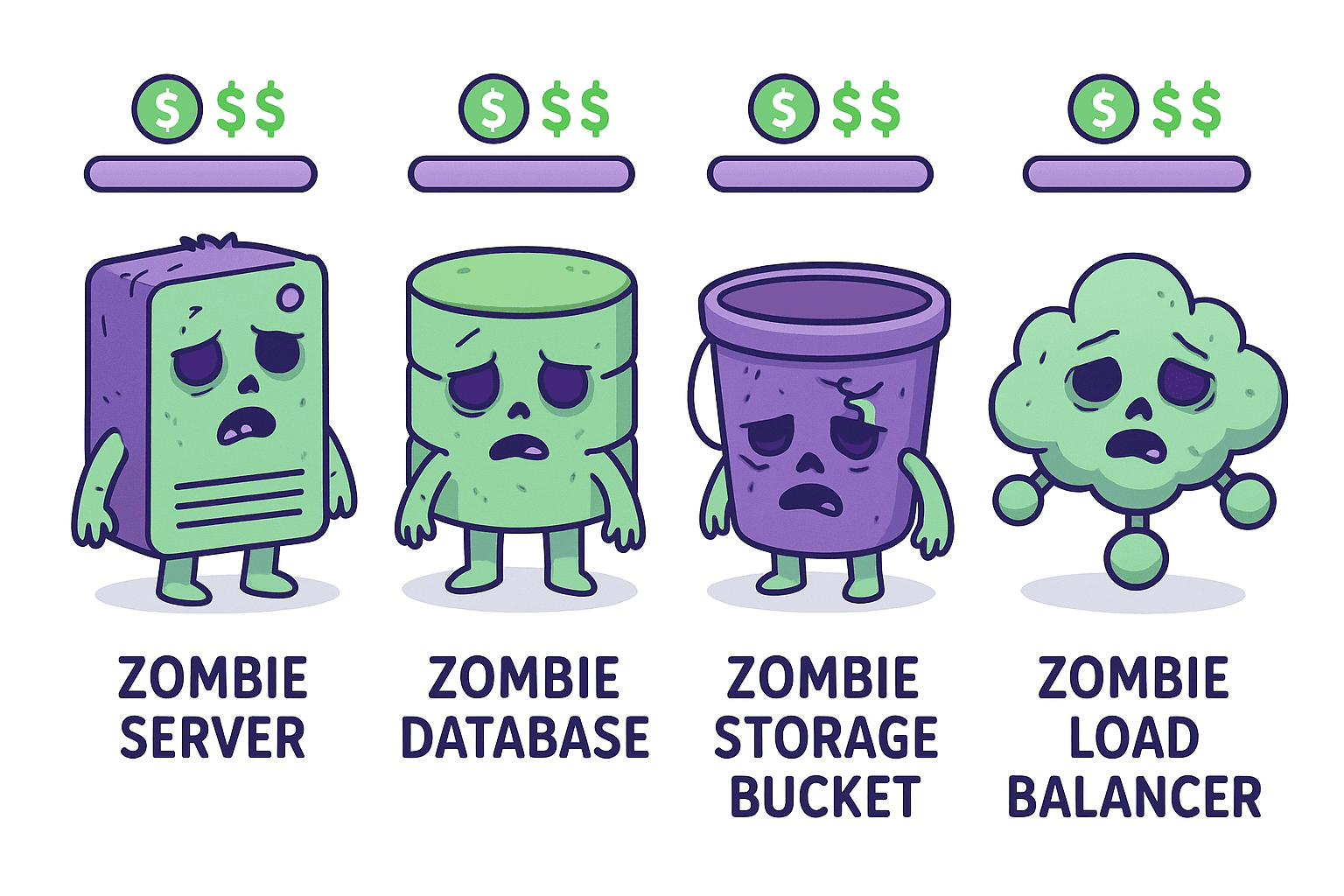
Idle and abandoned resources represent one of the most pervasive yet overlooked sources of cloud waste. Organizations routinely pay for virtual machines, storage volumes, and load balancers that haven't been accessed in months—sometimes years. These "zombie" resources accumulate because cloud infrastructure lacks the natural constraints of physical data centers, where unused hardware at least stops consuming rack space and power6.
The problem compounds over time. A developer spins up a test environment for a proof-of-concept that never materializes. The project ends, but the infrastructure persists. A database created for a one-time analysis continues running, still attached to premium storage tiers. Development environments provisioned for a team that has since moved to different projects keep consuming compute hours around the clock.
Unlike traditional IT environments where decommissioning unused equipment is a deliberate process, cloud resources can linger indefinitely with no mechanism for automatic cleanup. Each forgotten resource may seem inconsequential individually, but collectively they represent a significant and growing portion of the monthly bill. Without systematic audits and lifecycle management policies, these costs become permanent fixtures of the cloud budget.
Common Sources of Zombie Spend:
- Development and staging environments: Configured for 24/7 availability despite business-hours-only usage patterns
- Abandoned proof-of-concept infrastructure: Experimental resources that were never decommissioned after project completion
- Orphaned storage volumes: Detached from instances but still incurring storage costs across multiple availability zones
- Legacy databases and analytics instances: Containing outdated sample data with no active connections or queries
3) Overprovisioning: The Cost of Playing It Safe
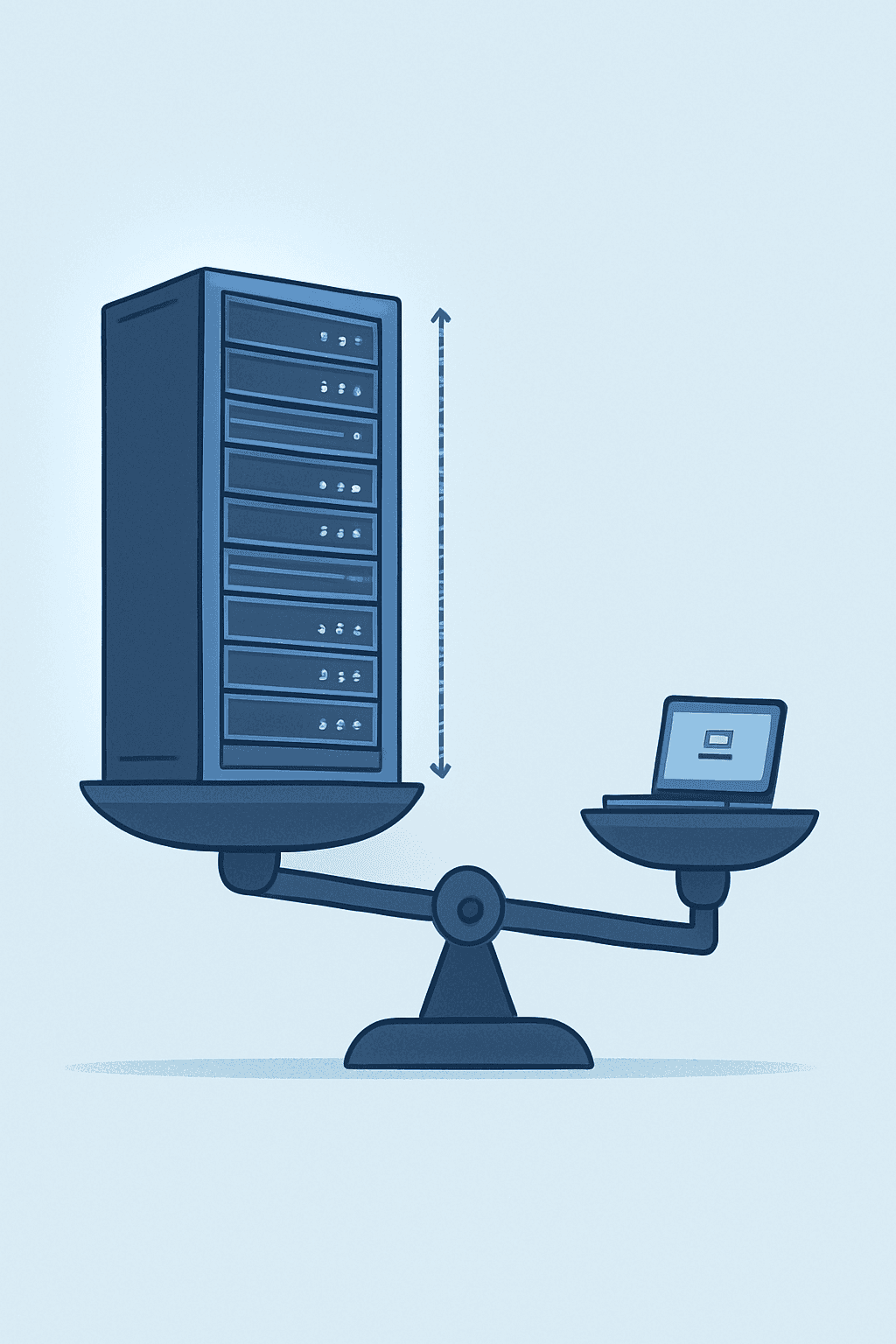
Resource overprovisioning stems from a fundamental misalignment between engineering incentives and cost optimization. Engineers are rewarded for system reliability and penalized for outages, creating a bias toward excess capacity. The result is infrastructure sized for peak loads that occur rarely, if ever, while the organization pays premium rates for unutilized capacity year-round7.
This pattern manifests across every layer of cloud infrastructure. Compute instances frequently run at utilization rates below 20%, with many organizations reporting average CPU utilization of 10-15%8 because teams provision for worst-case scenarios rather than actual demand. Database instances scaled for explosive growth that hasn't materialized consume resources designed to serve millions of transactions while handling thousands. Storage configurations mirror production requirements in development environments where performance needs are minimal.
The financial impact extends beyond the obvious waste of paying for unused capacity. Overprovisioned resources often run on premium tiers with features that provide no value to the actual workload. Auto-scaling policies set with such conservative thresholds that they rarely trigger, effectively negating the elasticity that makes cloud computing economically attractive. The compounding effect across hundreds or thousands of resources transforms cautious provisioning into a systematic drain on the cloud budget.
Typical Overprovisioning Patterns:
- Peak-load sizing for baseline operations: Production infrastructure dimensioned for annual traffic spikes while maintaining excess capacity during normal operations
- Development environments mirroring production: Non-production workloads running on enterprise-grade instances with performance characteristics that far exceed actual requirements
- Conservative auto-scaling configurations: Scaling policies configured with thresholds that maintain perpetual overcapacity rather than allowing systems to scale down during low-demand periods
- Precautionary resource allocation: Infrastructure provisioned for hypothetical future requirements that may never materialize
Reserved and spot instances can reduce cloud spending by 25–40% annually9, yet many organizations avoid these commitment-based pricing models due to concerns about flexibility, leaving substantial savings uncaptured.
4) Multi-Cloud Complexity: When Flexibility Becomes Fragmentation
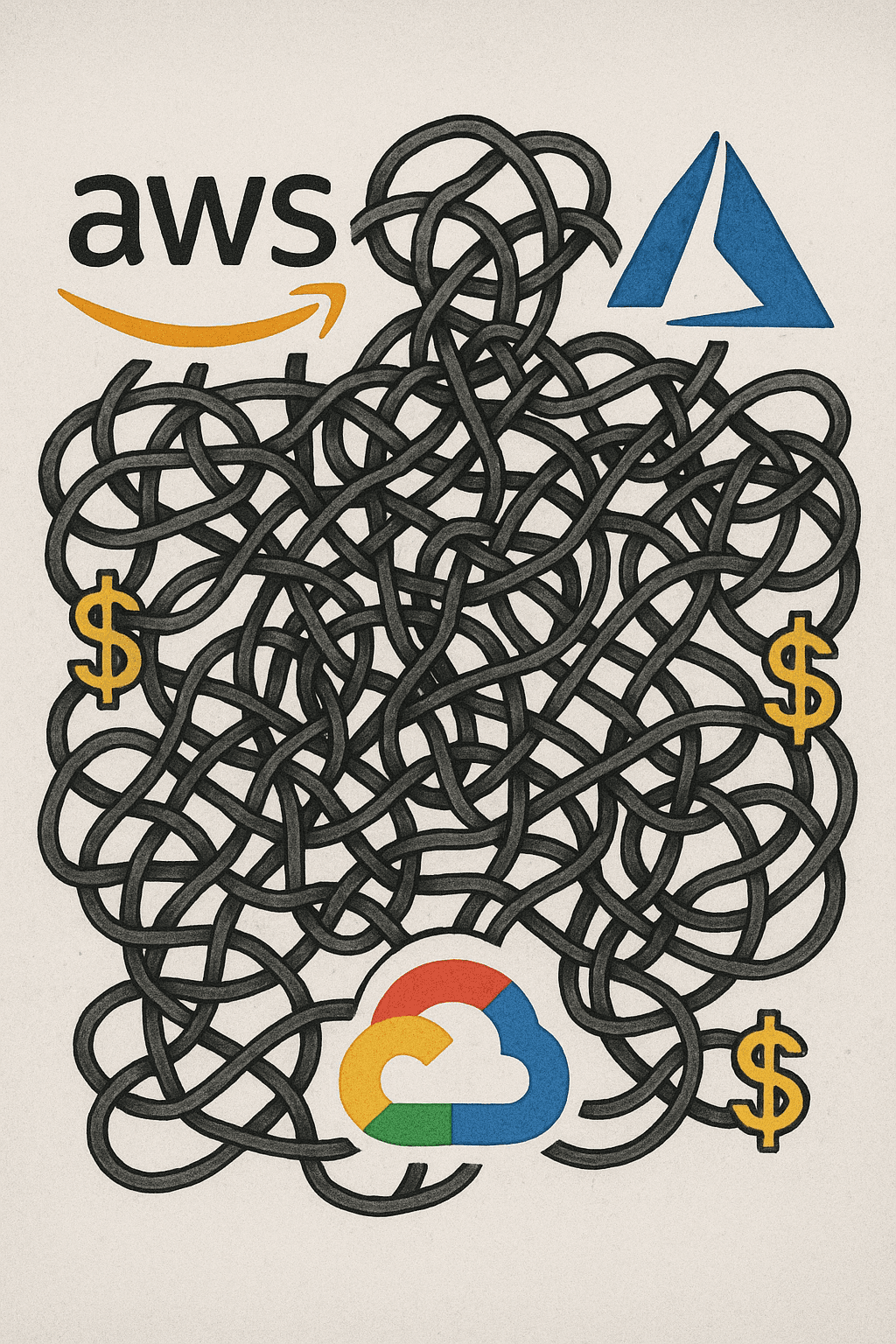
Multi-cloud strategies are often adopted to avoid vendor lock-in and leverage best-of-breed services across providers. While the strategic rationale appears sound, the operational reality frequently undermines the intended benefits. Organizations find themselves managing disparate platforms with fundamentally different architectures, pricing models, and operational paradigms—complexity that accumulates faster than the value it supposedly delivers10.
The challenges extend across every dimension of cloud operations. Each provider requires specialized expertise, from platform-specific certifications to deep knowledge of proprietary services and pricing structures. Cost optimization becomes exponentially more difficult as teams must master multiple billing systems, discount structures, and reservation models. Security and compliance frameworks must be replicated and adapted for each environment, multiplying the governance burden without corresponding improvements in security posture.
Perhaps most critically, multi-cloud environments undermine cost visibility. Without a unified view across providers, organizations struggle to compare workload costs, identify optimization opportunities, or establish consistent policies. The problem intensifies as workloads proliferate across clouds—41% of IT teams cite lack of visibility across multi-cloud environments as a primary concern11. What began as a strategy to increase flexibility often results in operational fragmentation that costs more to manage than the vendor lock-in it was meant to prevent.
Multi-Cloud Operational Challenges:
- Divergent pricing and service models: Each cloud provider implements distinct pricing structures, service offerings, and billing mechanisms that resist standardization
- Multiplicative skill requirements: Teams must maintain expertise across multiple platforms, effectively tripling the training burden and talent acquisition costs
- Fragmented governance and compliance: Security policies, access controls, and compliance frameworks must be implemented separately for each environment
- Absent unified optimization: No single tool or strategy can optimize across providers, forcing teams to maintain separate optimization processes for each cloud
The FinOps Foundation has developed FOCUS (FinOps Open Cost and Usage Specification), an open standard designed to normalize cloud cost and usage data across providers. By establishing a common schema for billing data, FOCUS enables organizations to build unified cost visibility and optimization practices across multi-cloud environments. Learn more at FOCUS12.
5) Unchecked Storage Growth: The Overlooked Cost Driver
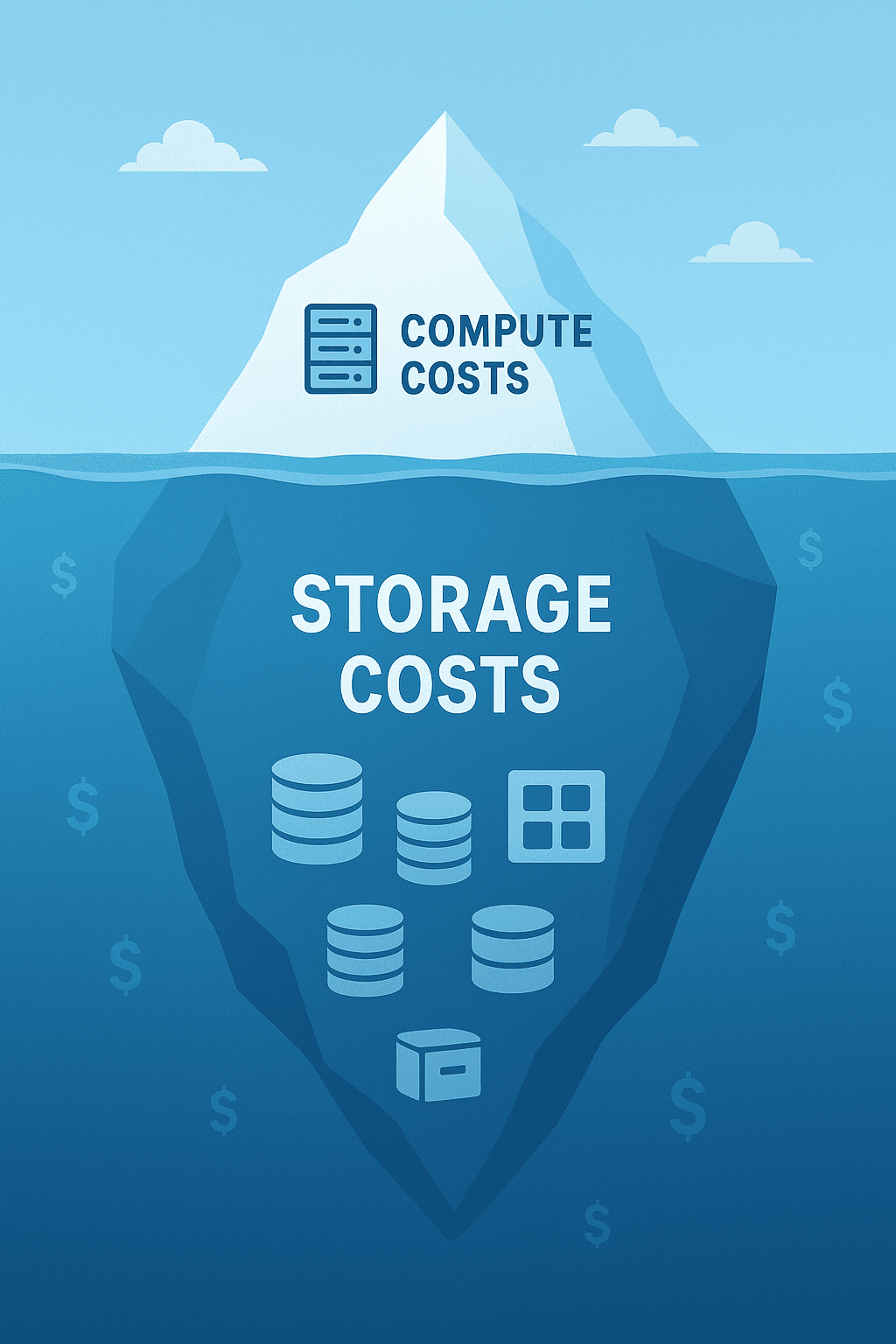
While compute costs attract the most attention in cloud optimization efforts, storage expenses quietly accumulate at alarming rates. Recent data shows that 94% of organizations report increasing storage costs, with 54% indicating that storage spending is growing faster than their overall cloud budget13. This disproportionate growth stems from storage being treated as an afterthought—easy to provision, difficult to decommission, and rarely reviewed once deployed.
Storage costs compound in ways that compute costs do not. Data persists indefinitely by default, accruing charges month after month without the natural lifecycle limits of compute instances. Organizations default to premium storage tiers for all data regardless of access patterns, paying high-performance prices for archives that are rarely touched. Backup strategies designed for on-premises constraints get lifted wholesale to the cloud, creating redundant copies across availability zones and regions without reassessing whether that level of replication remains necessary or cost-effective.
The problem is exacerbated by compliance misinterpretations and risk-averse data retention policies. Teams retain logs and transaction histories far beyond actual regulatory requirements, interpreting "keep everything forever" as the safest approach. Development and staging environments mirror production data stores, duplicating terabytes of information that serves no operational purpose. Each copied dataset, each extended retention period, and each unoptimized storage tier selection adds permanent line items to the monthly bill—costs that persist long after anyone remembers why the data was stored in the first place.
Common Storage Cost Drivers:
- Inappropriate storage tier selection: Mission-critical storage classes applied to infrequently accessed data, paying premium rates for performance that goes unused
- Redundant backup architectures: Multiple backup generations and cross-region replication policies that exceed recovery requirements and regulatory mandates
- Unbounded log retention: Application and system logs retained indefinitely under the guise of compliance, despite regulations typically requiring 90-day to 7-year retention maximums
- Defensive data duplication: Production data replicated across multiple regions and environments "for safety," multiplying storage costs without corresponding business value
6) Organizational Silos: When Departments Optimize in Isolation

Cloud cost optimization fails most frequently not from technical limitations but from organizational dysfunction. Research indicates that 52% of engineering leaders identify the disconnect between FinOps and development teams as a primary driver of wasted spending2. This fragmentation stems from the fundamental challenge that cloud costs span multiple organizational domains—finance, engineering, and operations—each with distinct objectives, metrics, and incentive structures.
The problem manifests as a series of misaligned decisions made in isolation. Finance teams establish budgets based on historical spending patterns and business projections, often without deep understanding of technical requirements or the relationship between infrastructure choices and business outcomes. Engineering teams make architecture and provisioning decisions focused on feature delivery and system reliability, with limited visibility into cost implications or budget constraints. Operations teams maintain and scale systems according to performance metrics and uptime requirements, disconnected from the financial consequences of their configuration choices.
This structural disconnect creates a gap where accountability dissolves. No single team owns the full cost-performance tradeoff, and optimization efforts remain fragmented across organizational boundaries. Finance can identify overspending but lacks the technical context to recommend solutions. Engineering can implement efficiency improvements but lacks the financial data to prioritize them effectively. Operations can tune systems for performance but can't evaluate whether the marginal gains justify the incremental costs. The result is cloud spending that satisfies no stakeholder—too expensive for finance, too constrained for engineering, and too complex for operations.
Silo-Driven Cost Inefficiencies:
- Budget allocation without technical context: Finance teams establish spending limits based on business forecasts rather than infrastructure requirements, creating mismatches between allocated budgets and actual technical needs
- Resource provisioning without cost awareness: Engineering decisions prioritize feature delivery and reliability over cost efficiency, with limited feedback loops connecting infrastructure choices to budget impact
- Operations optimization without financial visibility: System administrators tune for performance and availability metrics without understanding the cost implications of configuration changes or scaling decisions
- Absent cross-functional accountability: No unified ownership of cost-performance tradeoffs, allowing optimization opportunities to fall into gaps between departmental responsibilities
Organizations that implement cross-functional FinOps teams with representatives from finance, engineering, and operations reduce cloud waste by 20-35% in the first year through improved coordination and shared accountability14.
7) Deferred Optimization: The Compounding Cost of "Later"

The "optimize later" mentality represents one of the most expensive fallacies in cloud adoption. Organizations prioritize speed to market over cost efficiency, operating under the assumption that optimization can be retrofitted once the product gains traction. This decision appears rational in the short term—engineers focus on feature delivery rather than cost tuning, accelerating time to market. However, the technical and financial debt accumulated during this period compounds rapidly, and the promised optimization phase rarely materializes with adequate resources or priority.
The mathematics of deferred optimization are unforgiving. Technical debt in cloud environments accumulates rapidly as suboptimal patterns become embedded in architecture, replicated across services, and institutionalized in deployment practices. Studies show that technical debt remediation costs grow exponentially over time, with delayed fixes requiring 10-20x more effort than addressing issues during initial development15. By the time organizations recognize the need for optimization, what could have been addressed with minor adjustments now requires substantial refactoring across interconnected systems. Research indicates that 53% of enterprises have yet to realize substantial value from their cloud investments4, often because cost inefficiencies consume the anticipated benefits.
The organizational dynamics further entrench the problem. Teams that built the initial system have moved to new projects, taking institutional knowledge with them. Product roadmaps remain focused on new features rather than cost optimization, which generates no visible customer value despite its financial impact. Without dedicated resources and executive sponsorship, optimization initiatives languish indefinitely while costs continue to accumulate month after month.
Consequences of Optimization Deferral:
- Exponential remediation costs: Technical debt remediation requires 10-20x more effort when deferred, transforming minor inefficiencies into architectural challenges that demand substantial refactoring15
- Lost competitive advantage: Excessive cloud spending diverts budget from product development and market expansion, allowing more cost-efficient competitors to outinvest in innovation
- Organizational inertia: Teams transition to new projects before optimization occurs, and product roadmaps prioritize feature delivery over cost efficiency, leaving optimization perpetually deprioritized
- Unsustainable unit economics: Products that defer optimization often reach a point where infrastructure costs consume margins, forcing difficult choices between profitability and growth
Organizations that defer cloud optimization effectively subsidize competitor innovation. Every dollar wasted on inefficient infrastructure is a dollar unavailable for product development, market expansion, or competitive response.
8) Data Transfer Costs: The Hidden Infrastructure Tax

Data transfer charges represent one of cloud computing's least transparent cost components. While providers advertise compute and storage pricing prominently, data egress fees—charges for moving data between regions, availability zones, or out of the cloud entirely—often appear as surprise line items that can dwarf the infrastructure costs they were meant to support. These charges accumulate from architectural decisions made without full awareness of their pricing implications6.
The problem stems from the fundamental disconnect between technical architecture and billing structure. Engineers design systems for redundancy, performance, and resilience—goals that naturally lead to data distribution across geographic regions. Multi-region deployments for disaster recovery generate continuous synchronization traffic. Content delivery networks replicate data to edge locations worldwide. Backup strategies copy data across regions for geographic redundancy. Each of these technically sound decisions triggers data transfer charges that compound with scale.
The financial impact becomes particularly acute in multi-cloud and hybrid architectures. Data movement between cloud providers incurs egress charges from the source provider and ingress processing costs at the destination. API-driven architectures that span clouds generate per-request transfer fees that accumulate imperceptibly until the monthly bill arrives. Analytics pipelines that move data to specialized processing environments for machine learning or business intelligence create ongoing transfer costs that can exceed the cost of the compute resources performing the analysis. Organizations discover too late that their architectural choices have embedded permanent, scaling costs into their infrastructure.
Primary Data Transfer Cost Drivers:
- Cross-region replication for resilience: Geographic redundancy strategies generate continuous synchronization traffic between regions, with charges applied to data leaving the source region
- Multi-cloud data synchronization: Architectures spanning multiple cloud providers incur egress fees from each source cloud plus ingress processing costs, effectively taxing data twice
- Geographic backup distribution: Backup strategies that replicate across continents for disaster recovery multiply storage costs with transfer fees for initial replication and ongoing incremental updates
- Distributed API architectures: Microservices and API-driven systems that span regions or clouds accumulate per-request transfer charges that scale with traffic volume and geographic distribution
The Way Forward: From Chaos to Control
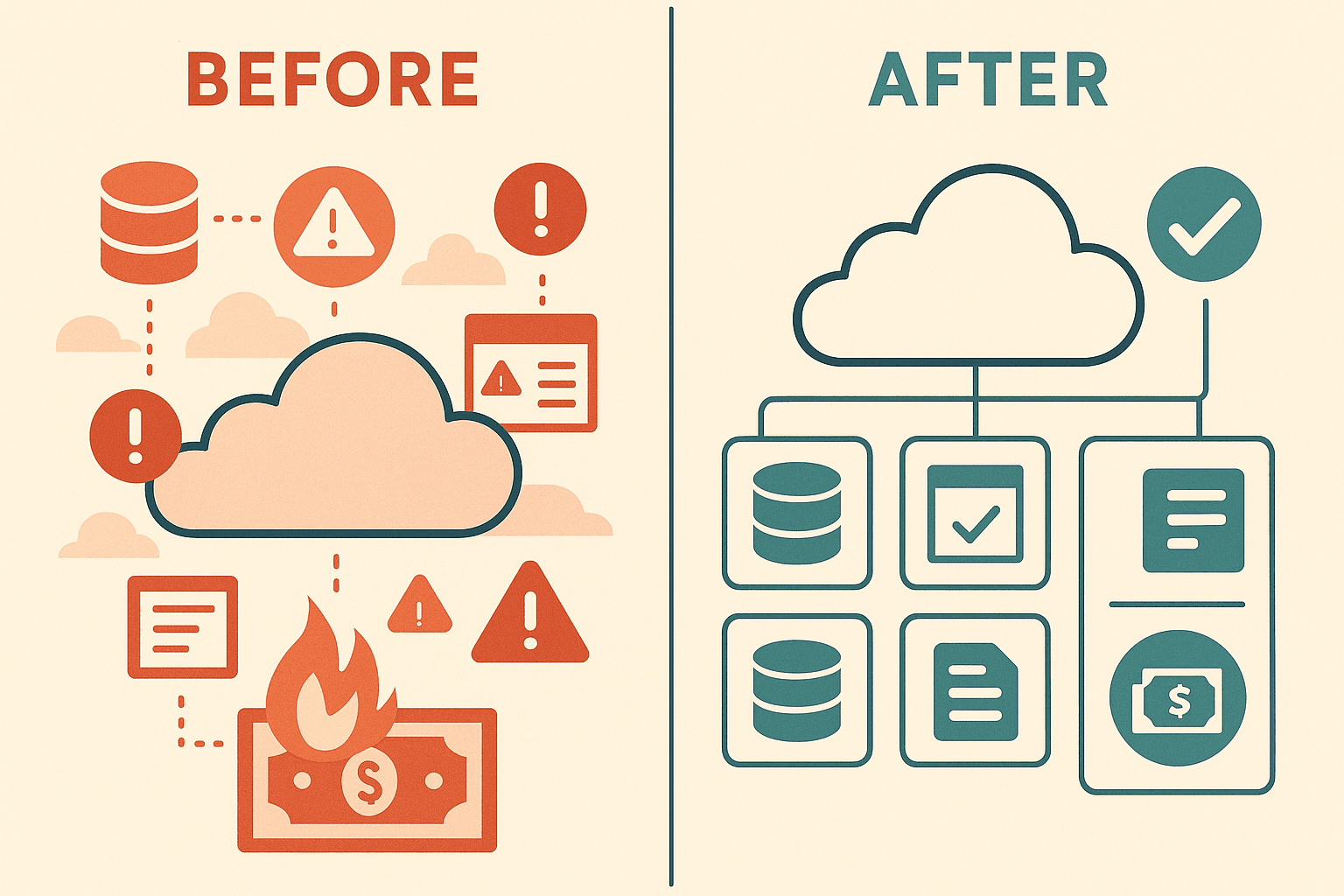
While the eight mistakes outlined above represent significant financial drains, they share a common characteristic: each is addressable through systematic intervention. The challenge lies not in the complexity of individual solutions but in establishing organizational commitment to ongoing optimization. Research consistently demonstrates that the most costly mistake organizations make is failing to adopt structured FinOps practices at all616.
Successful cloud cost optimization follows a predictable pattern—initial discovery and quick wins that build momentum, followed by strategic improvements and cultural transformation that sustain results. The timeline below provides a framework for organizations beginning their optimization journey.
30-Day Cloud Cost Optimization Framework:
Week 1: Establish Baseline and Identify Low-Hanging Fruit
- Implement comprehensive resource tagging across all cloud accounts to enable cost attribution
- Conduct zombie resource audit to identify idle or abandoned infrastructure
- Map data transfer patterns to understand inter-region and cross-cloud traffic costs
Week 2: Execute High-Impact Quick Wins
- Decommission confirmed zombie resources and unused services
- Deploy scheduling automation for development and non-production environments
- Right-size obviously oversized instances based on utilization data
Week 3: Implement Strategic Cost Optimizations
- Analyze workload patterns and commit to reserved or savings plan instances where appropriate
- Migrate infrequently accessed data to lower-cost storage tiers
- Rationalize multi-cloud architecture to reduce unnecessary complexity
Week 4: Build Sustainable Cost Management Culture
- Roll out cost visibility dashboards providing teams with real-time spending data
- Establish cross-functional FinOps team with representatives from finance, engineering, and operations
- Create recognition system for teams that achieve cost optimization milestones
The Strategic Choice
Cloud cost optimization represents a fundamental strategic decision with lasting competitive implications. Organizations face a clear choice: invest in systematic cost management that frees resources for innovation and growth, or continue operating with inefficiencies that compound over time and limit strategic options.
The data underscores the urgency. Only 30% of organizations can accurately attribute their cloud costs1, leaving the majority without the visibility necessary for informed decisions. This gap doesn't merely represent accounting imprecision—it reflects foregone opportunities for optimization, innovation, and competitive positioning. Every dollar consumed by inefficient infrastructure is a dollar unavailable for product development, market expansion, or strategic initiatives that drive business outcomes.
The path forward requires commitment but delivers measurable results. Organizations that implement structured FinOps practices consistently reduce cloud spending by 20-35% while maintaining or improving performance17. More importantly, they establish sustainable cost management capabilities that scale with their business, preventing waste from accumulating as infrastructure grows.
SpotLabs specializes in transforming cloud cost structures for AWS, Azure, and GCP environments. Our performance-based engagement model aligns our success with your savings—we only succeed when you achieve measurable cost reduction.
Schedule a Free Cloud Cost Audit to understand your optimization potential and receive a detailed analysis of where your cloud spending can be improved.
About the Author: Patrick Menlove is the founder and CEO of SpotLabs, a cloud cost optimization consultancy that provides performance-based cost reduction services for AWS, Azure, and GCP. With deep technical expertise in cloud infrastructure, Kubernetes, and billing systems architecture, Patrick brings experience fromhis career at Skyscanner to enterprises and SMEs transform their cloud costs from liability to competitive advantage.
References:
Footnotes
-
N2W Software. (2025, June 25). "49 Cloud Computing Statistics You Must Know in 2025." Retrieved from https://n2ws.com/blog/cloud-computing-statistics ↩ ↩2
-
Harness. (2025, February 26). "$44.5 Billion in Infrastructure Cloud Waste Projected for 2025 Due to FinOps and Developer Disconnect, Finds 'FinOps in Focus' Report from Harness." PR Newswire. Retrieved from https://www.prnewswire.com/news-releases/44-5-billion-in-infrastructure-cloud-waste-projected-for-2025-due-to-finops-and-developer-disconnect-finds-finops-in-focus-report-from-harness-302385580.html ↩ ↩2
-
CIO. (2025, September 30). "31% of IT leaders waste half their cloud spend." Retrieved from https://www.cio.com/article/4064316/31-of-it-leaders-waste-half-their-cloud-spend.html ↩
-
CloudZero. (2025, May 12). "90+ Cloud Computing Statistics: A 2025 Market Snapshot." Retrieved from https://www.cloudzero.com/blog/cloud-computing-statistics/ ↩ ↩2
-
FinOps Foundation. (2024). "State of FinOps 2024." Retrieved from https://data.finops.org/ ↩
-
Aspire Systems. (2025, May 26). "Top 10 Cloud Cost Optimization Mistakes Enterprises Make." Retrieved from https://www.aspiresys.com/blog/cloud/cloud-in-insurance/top-10-cloud-cost-optimization-mistakes-enterprises-make/ ↩ ↩2 ↩3
-
Gartner. (n.d.). "7 Reasons Cloud Budgets Don't Stay in Check." Retrieved from https://www.gartner.com/en/articles/why-cloud-budgets-don-t-stay-in-check-and-how-to-make-sure-yours-do ↩
-
Flexera. (2024). "2024 State of the Cloud Report." Retrieved from https://www.flexera.com/blog/cloud/cloud-computing-trends-2024-state-of-the-cloud-report/ ↩
-
Data Stack Hub. (2025). "Cloud Usage Statistics." Retrieved from https://www.datastackhub.com/insights/cloud-usage-statistics/ ↩
-
CloudKeeper. (n.d.). "Key cloud cost optimization challenges for enterprises in 2024." Retrieved from https://www.cloudkeeper.com/insights/blog/key-challenges-cloud-cost-optimization-2024 ↩
-
Brightlio. (2025, October 12). "300+ Cloud Computing Statistics (October- 2025)." Retrieved from https://brightlio.com/cloud-computing-statistics/ ↩
-
FinOps Foundation. (n.d.). "FinOps Open Cost and Usage Specification (FOCUS)." Retrieved from https://focus.finops.org/ ↩
-
Lucidity. (n.d.). "Optimizing Cloud Spend: FinOps Best Practices for Enterprises." Retrieved from https://www.lucidity.cloud/blog/finops-best-practices ↩
-
FinOps Foundation. (2023). "FinOps Framework: Building Cloud Financial Management Capabilities." Retrieved from https://www.finops.org/framework/ ↩
-
McConnell, S. (2004). "Code Complete, Second Edition." Microsoft Press. ISBN-13: 978-0735619678 ↩ ↩2
-
Aspire Systems. (2025, May 14). "Top 10 Cloud Cost Optimization Mistakes Enterprises Make - Blog." Retrieved from https://blog.aspiresys.com/cloud/top-10-cloud-cost-optimization-mistakes-enterprises-make/ ↩
-
Gartner. (2023). "How to Optimize Cloud Costs." Gartner Research. Retrieved from https://www.gartner.com/en/information-technology/insights/cloud-strategy ↩